
Cold-Air Nebulizing Technology Explained: How Waterless Diffusers Work

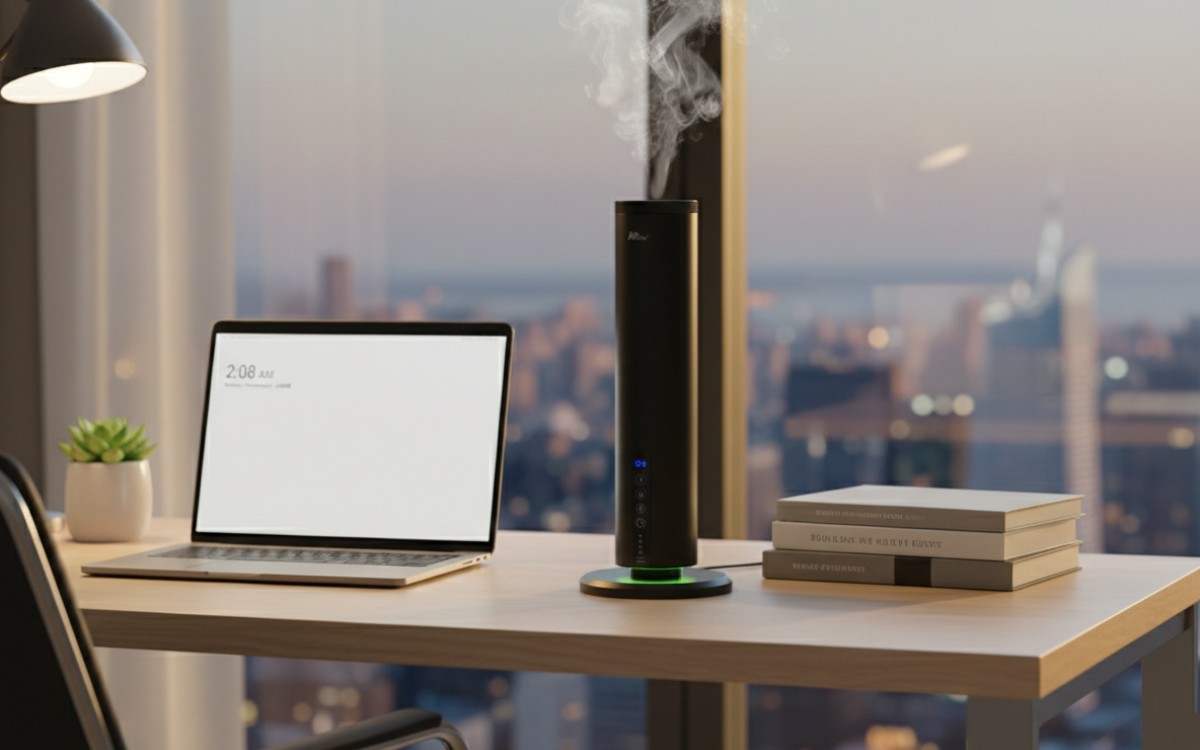
Cold-air nebulizing diffusion is often associated with luxury hotels and premium fragrance systems. But what exactly is this technology — and how does it differ from traditional diffusers?
Understanding how cold-air diffusion works helps explain why it produces a stronger and more refined scent experience.
What Is Cold-Air Nebulizing Technology?
Cold-air nebulizing technology is a method of dispersing essential oils into the air without using:
- Water
- Heat
- Chemical propellants
Instead, it uses pressurized airflow to break pure essential oil into microscopic particles.
This process is known as atomization.
How Atomization Works
Inside a nebulizing diffuser:
NUMBER 1
Air pressure passes through a narrow tube
NUMBER 2
The airflow creates a vacuum effect
NUMBER 3
Pure essential oil is drawn upward
NUMBER 4
Oil is broken into ultra-fine micro-particles
NUMBER 5
These particles disperse into the air evenly
The result is a dry, concentrated fragrance diffusion.
Why “Cold-Air” Matters
-
 Many traditional scenting systems use heat to evaporate oils. Heat canOil based (waterless) diffusers offer several powerful benefits:
1- Alter chemical composition
2- Break down delicate aromatic compounds
3- Change the top, middle, and base notes -
 Prevent heat by releasing cold airCold-air diffusion avoids heat entirely, helping preserve the original structure of the essential oil. This allows:
1- More accurate scent reproduction
2- Cleaner fragrance profile
3- Greater aromatic integrity
Particle Size & Air Suspension
One of the most important factors in scent diffusion is particle size.
Cold-air systems create extremely small oil particles that:
- Remain suspended in air longer
- Spread more evenly
- Provide consistent coverage
Larger droplets (like those from water-based mist systems) may fall more quickly or evaporate unevenly.
Where Cold-Air Diffusion Is Commonly Used
Cold-air nebulizing technology is frequently used in:

Luxury hotels

Retail scent marketing

High-end residential spaces

Boutique offices

Automotive scent systems
Consistency and controllability are key reasons for its adoption in professional environments.
Why Cold-Air Diffusion Feels “Stronger”
Cold-air systems use undiluted essential oil.
Because there is no water dilution:
- Fragrance concentration is higher
- Scent projection is more noticeable
- Aroma longevity improves
This is often why waterless diffusers are described as producing a “hotel-like” scent experience.
Maintenance Considerations
Compared to water-based diffusers, cold-air systems:
1- Do not require water refills
2- Reduce moisture-related cleaning
3- Minimize mold risk
Occasional nozzle or pathway cleaning may still be necessary depending on oil viscosity.
Is Cold-Air Diffusion Right for Everyone?
Cold-air diffusion may be ideal if you
1- Prefer strong, consistent scent
2- Want no added humidity
3- Live in humid climates
4- Value fragrance clarity
Ultrasonic systems may be sufficient for lighter, more subtle scenting needs.
Final Thoughts
Cold-air nebulizing technology represents a more concentrated and controlled approach to fragrance diffusion.
By atomizing pure essential oil without water or heat, it delivers consistent, refined scent performance across a variety of environments.
Understanding the engineering behind diffusion helps you choose the right system for your needs.