
Oil Diffuser vs Ultrasonic Diffuser: What’s the Real Difference?


When shopping for an essential oil diffuser, you’ll often see two main technologies:
- Ultrasonic diffusers
- Oil-based (waterless / nebulizing) diffusers
Although both disperse fragrance into the air, they operate very differently — and produce noticeably different scent experiences.
Understanding the differences can help you choose the right diffuser for your home, office, or vehicle.

What Is an Ultrasonic Diffuser?
-
 An ultrasonic diffuser is a water-based device that1- Combines essential oil with water
2- Uses ultrasonic vibration to create a fine mist
3- Releases diluted fragrance into the air
Because it uses water, it also functions as a mild humidifier. -
 Advantages of Ultrasonic Diffusers1- Affordable
2- Quiet operation
3- Adds light humidity
4- Widely available -
 Limitations of Ultrasonic Diffusers1- Diluted fragrance
2- Requires frequent cleaning
3- Performance depends on humidity
4- Can leave residue if not maintained
Ultrasonic diffusers are often ideal for users who prefer a light, subtle aroma.

What Is an Oil (Waterless) Diffuser?
-
 Oil diffusersOil diffusers — often called cold-air nebulizing diffusers — operate without water. They:
1- Use air pressure to atomize pure essential oil
2- Release micro-particles directly into the air
3- Do not dilute fragrance
This produces a more concentrated scent experience. -
 Advantages of Oil-Based Diffusers1- Stronger scent projection
2- No water required
3- More consistent diffusion
4- No added humidity
5- Preserves oil purity (no heat involved) -
 Considerations1- Typically higher initial cost
2- Uses oil more quickly than water-based systems
Oil diffusers are often used in environments where scent performance and consistency matter most.
Key Differences: Side-by-Side Comparison
| Feature | Ultrasonic Diffuser | Oil (Waterless) Diffuser |
|---|---|---|
| Uses Water | Yes | No |
| Fragrance Strength | Light to Moderate | Moderate to Strong |
| Humidity Added | Yes | No |
| Maintenance | Frequent tank cleaning | Minimal cleaning |
| Climate Sensitivity | Affected by humidity | More stable performance |
| Oil Purity | Diluted | Pure oil diffusion |
Which Diffuser Produces Stronger Scent?
Oil-based diffusers typically produce stronger scent projection because:
- The oil is not diluted
- Particle size is optimized for suspension
- There is no added moisture competing with evaporation
Ultrasonic diffusers create aromatic mist — oil diffusers create concentrated fragrance dispersion.

Which Diffuser Is Better for Large Rooms?
For larger areas:
- Ultrasonic diffusers may struggle due to dilution
- Oil diffusers often perform more consistently
That’s why cold-air diffusion systems are frequently used in hospitality, retail, and scent marketing applications.
Which Diffuser Is Better for Sensitive Environments?
If you prefer
1- Light humidity
2- Subtle aroma
3- Lower oil consumption
An ultrasonic diffuser may suit your needs.
If you prefer
1- Strong, consistent scent
2- No added moisture
2- Premium fragrance performance
An oil-based diffuser may be the better choice.
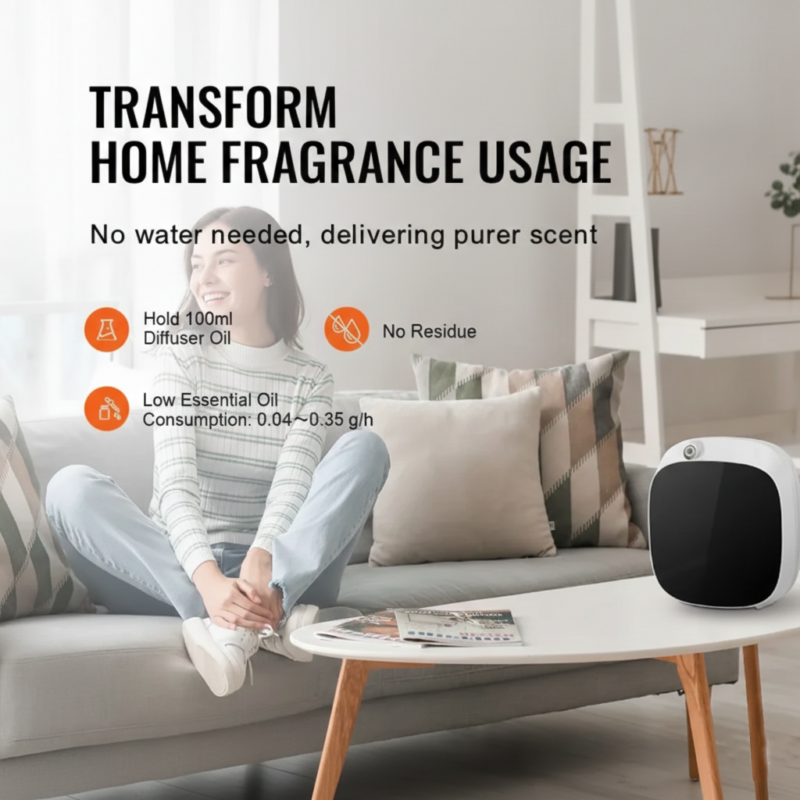
Maintenance & Cleaning: How Ultrasonic and Oil Diffusers Differ
Ultrasonic diffusers require
1- Water refills
2- Tank cleaning
3- Mold prevention
Oil diffusers typically require
1- Occasional nozzle cleaning
2- Bottle replacement
Less moisture often means less internal residue.
Final Thoughts
The difference between oil diffusers and ultrasonic diffusers comes down to technology and scent intensity.
Ultrasonic diffusers create aromatic mist.
Oil-based diffusers disperse concentrated fragrance.
Both have their place — but they serve different scent goals.
Understanding the difference allows you to select a diffuser that matches your climate, space size, and fragrance expectations.