
Oil Diffuser vs Water Diffuser in Humid Climates: Which Performs Better?

Humidity plays a significant role in how fragrance diffuses in the air. If you live in a humid climate or experience seasonal humidity shifts, you may notice that some diffusers feel weaker, inconsistent, or short-lived.
Understanding the difference between water-based (ultrasonic) diffusers and oil-based (waterless / nebulizing) diffusers can help you choose the right solution for your environment.
How Water Based (Ultrasonic) Diffusers Work
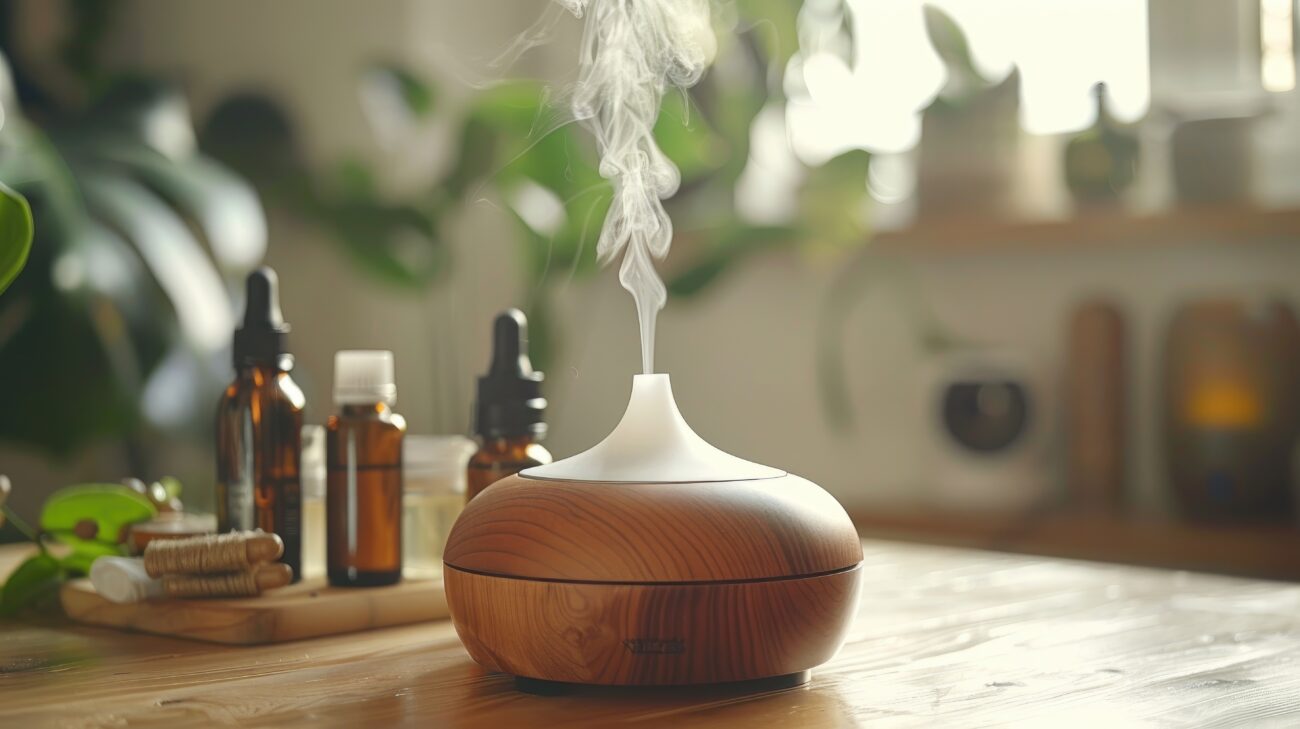
Ultrasonic diffusers operate by:
- Mixing essential oil with water
- Using ultrasonic vibration to create a fine mist
- Releasing diluted oil particles into the air
Because they rely on water evaporation, their performance depends heavily on surrounding air conditions.

Why Humidity Affects Scent Diffusion
Humidity has a direct impact on how fragrance spreads through the air. Since the air can only hold a limited amount of moisture, humid environments create several challenges for scent diffusion:
-
 In humid environmentsAir can only hold a limited amount of moisture.
1- The air is already saturated with water vapor
2- Additional moisture evaporates more slowly
3- Fragrance molecules disperse less efficiently -
 the dropletsWhen ultrasonic diffusers release water mist in humid air
1- Evaporate more slowly
2- Carry less concentrated fragrance
3- Produce weaker scent projection
This often results in a lighter or shorter-lasting aroma experience.
The Dilution Factor: Oil + Water
In water-based diffusers:
- Essential oil is diluted
- Each mist particle contains lower fragrance concentration
- Environmental moisture competes with evaporation
In high-humidity environments, this dilution effect becomes more noticeable.
This does not mean ultrasonic diffusers are ineffective — but their performance can vary depending on climate.
How Waterless (Oil Based) Diffusers Respond Differently
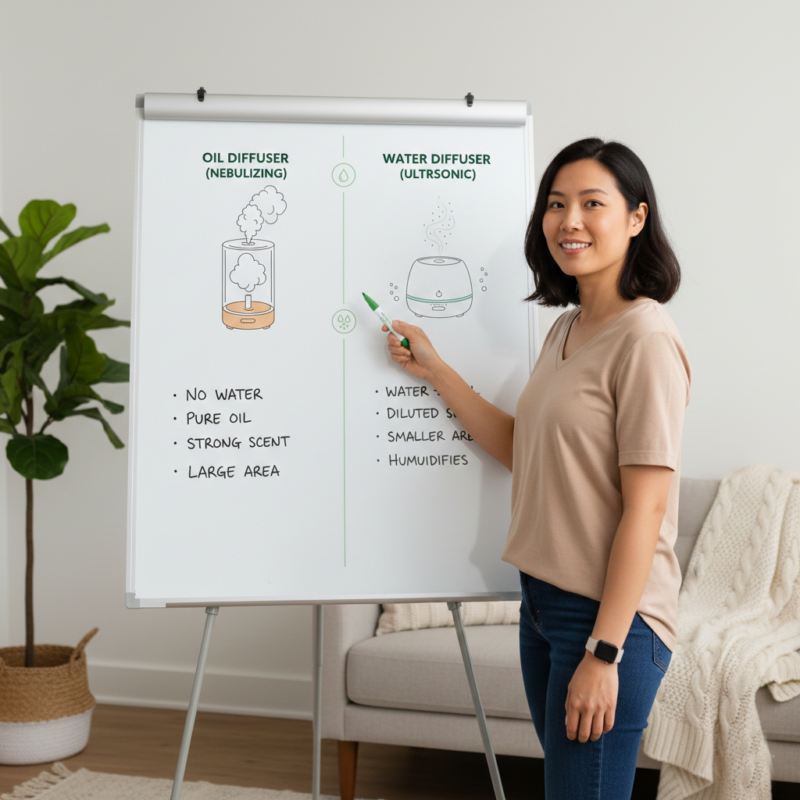
Waterless diffusers — also called cold-air nebulizing diffusers — operate without water.
Instead, they
1- Use pressurized air to atomize pure essential oil
2- Release ultra-fine oil particles directly into the air
3- Avoid adding extra humidity
Because there is no water involved
1- Diffusion strength is more consistent
2- Humidity has less impact on scent projection
3- Fragrance concentration remains higher
This technology is often used in professional scenting environments where consistent aroma performance is important.
Climate Considerations: When Does It Matter Most?
You may notice humidity-related scent differences in:
- Coastal regions
- Summer months
- Bathrooms
- Small enclosed spaces
- High-humidity indoor environments
In these settings, water-based systems may feel lighter, while oil-based systems maintain stronger projection.
Which Diffuser Is Better for Humid Climates?
The answer depends on your goal:
Choose a Water Based Ultrasonic Diffuser If You:
- You want added humidity
- You prefer light ambient fragrance
- You are in a dry climate
Consider a Waterless Oil Diffuser If You:
- You want stronger scent projection
- You live in humid conditions
- You prefer concentrated fragrance
- You want consistent year-round performance
Final Thoughts
Humidity affects how scent travels through air. Water-based diffusers rely on moisture to carry fragrance, while oil-based systems disperse concentrated oil particles without dilution.
Understanding this difference allows you to choose the right diffusion technology for your space and climate.